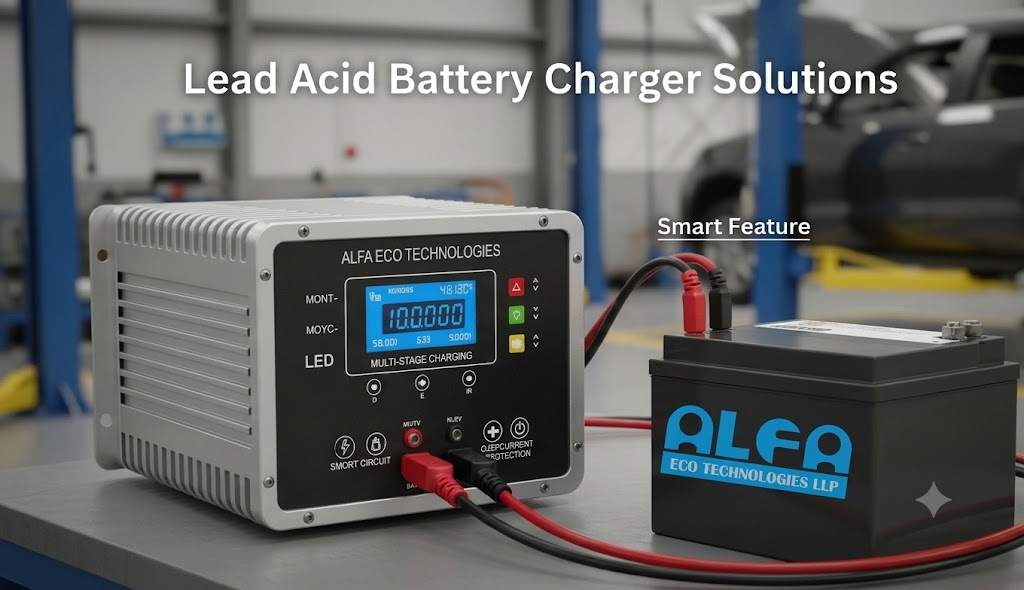
Lead Acid Battery Charger: How It Works, Types & Why It Matters
A lead acid battery charger is a critical device used to safely recharge lead-acid batteries used in automotive systems, electric vehicles, backup power systems, and industrial equipment. These chargers regulate voltage and current to ensure the battery charges efficiently without overcharging or damaging the battery cells.
Modern lead acid battery charging systems are designed with intelligent control features that improve battery life, optimize charging performance, and ensure reliable energy storage.
What Is a Lead Acid Battery Charger ?
A lead acid battery charger is an electronic device that restores electrical energy to a lead-acid battery by supplying controlled DC current
Lead-acid batteries are commonly used in :
- Automobiles
- UPS backup systems
- Electric vehicles
- Solar energy storage
- Industrial equipment
- Telecom infrastructure
A proper charger ensures the battery receives the correct voltage and current levels to prevent damage and extend battery lifespan.
How a Lead Acid Battery Charger Works ?
A lead acid battery charging system operates through a controlled multi-stage process to maintain battery health and efficiency.
1. Bulk Charging Stage
In the first stage, the charger supplies a high current to quickly charge the battery up to about 70 - 80% capacity.
2. Absorption Stage
During this phase, the charger reduces the current while maintaining constant voltage. This allows the battery to reach near full capacity without overheating.
3. Float Charging Stage
The final stage maintains the battery at full charge by supplying a small current to compensate for self-discharge.
This multi-stage charging process protects the battery from overcharging and improves performance.
Types of Lead Acid Battery Chargers
Different applications require different lead acid charging systems.
Automatic Battery Charger
Automatic chargers monitor the battery voltage and stop charging when the battery reaches full capacity.
Best used for :
- Automotive batteries
- Home backup systems
- Portable devices
Smart Battery Charger
Smart chargers use microcontroller technology to adjust charging levels based on battery condition.
Advantages include :
- Improved battery life
- Energy efficiency
- Safety protection
Industrial Battery Charger
Industrial chargers are used in large systems such as forklifts, telecom infrastructure, and power backup systems
Features include :
- High power capacity
- Continuous operation
- Heavy-duty design
Key Features of Modern Lead Acid Battery Chargers
A reliable lead acid battery charger includes several advanced features to ensure safety and efficiency.
Voltage Regulation
Maintains the correct charging voltage to prevent battery damage.
Overcharge Protection
Automatically stops charging when the battery is full.
Temperature Protection
Prevents overheating during charging.
Short Circuit Protection
Protects the system from electrical faults.
Efficient Power Conversion
Modern chargers reduce energy loss during charging.
Applications of Lead Acid Battery Chargers
Lead acid battery chargers are widely used across multiple industries.
Automotive Industry
Used for charging car batteries and maintaining battery performance.
Electric Mobility
Electric vehicles and electric scooters use lead-acid battery systems in many applications.
Solar Power Systems
Lead-acid batteries store energy generated from solar panels, requiring efficient charging systems.
Industrial Equipment
Forklifts, automated machinery, and backup systems rely on reliable battery chargers.
Telecommunications
Telecom towers and communication infrastructure depend on battery backup systems.
Benefits of Using a High-Quality Lead Acid Battery Charger
Using a well-designed lead acid charging system offers several benefits.
Longer Battery Life
Controlled charging prevents damage to battery cells.
Improved Energy Efficiency
Efficient chargers reduce power consumption.
Enhanced Safety
Protection circuits prevent overheating, overcharging, and electrical faults.
Reliable Power Backup
Proper charging ensures batteries are always ready for backup power needs.
Choosing the Right Lead Acid Battery Charger
When selecting a lead acid battery charger, consider the following factors :
- Battery voltage compatibility
- Charging current capacity
- Charging stages and control features
- Safety protections
- Application requirements
Choosing the correct charger improves battery performance and ensures safe operation.
Future of Lead Acid Battery Charging Technology
Charging technology continues to evolve with innovations in power electronics and smart control systems.
Emerging trends include :
- Smart charging algorithms
- IoT-enabled battery monitoring
- High-efficiency switching power supplies
- Integration with renewable energy systems
These advancements improve battery reliability and energy management across industries.
Frequently Asked Questions (FAQ)
Q1. What is a lead acid battery charger ?
A lead acid battery charger is a device that supplies controlled electrical energy to recharge lead-acid batteries used in vehicles, industrial equipment, and backup power systems.
Q2. How long does it take to charge a lead acid battery ?
Charging time depends on battery capacity and charger output. Most lead-acid batteries take 6 to 12 hours for a full charge.
Q3. Can a lead acid battery be overcharged ?
Yes. Overcharging can damage the battery and reduce its lifespan. Modern chargers include overcharge protection to prevent this.
Q4. What are the stages of lead acid battery charging ?
The three main stages are bulk charging, absorption charging, and float charging, which ensure efficient and safe battery charging.
Q5. Where are lead acid batteries commonly used ?
Lead-acid batteries are widely used in automobiles, UPS systems, solar energy storage, telecom systems, and industrial machinery.
Final Thoughts
A vehicle access control system is an essential security solution for modern facilities. It improves safety, streamlines vehicle entry, and provides accurate tracking of vehicle movement.
Whether used in residential communities, corporate offices, or industrial facilities, vehicle access systems provide smart, automated, and reliable vehicle security management.