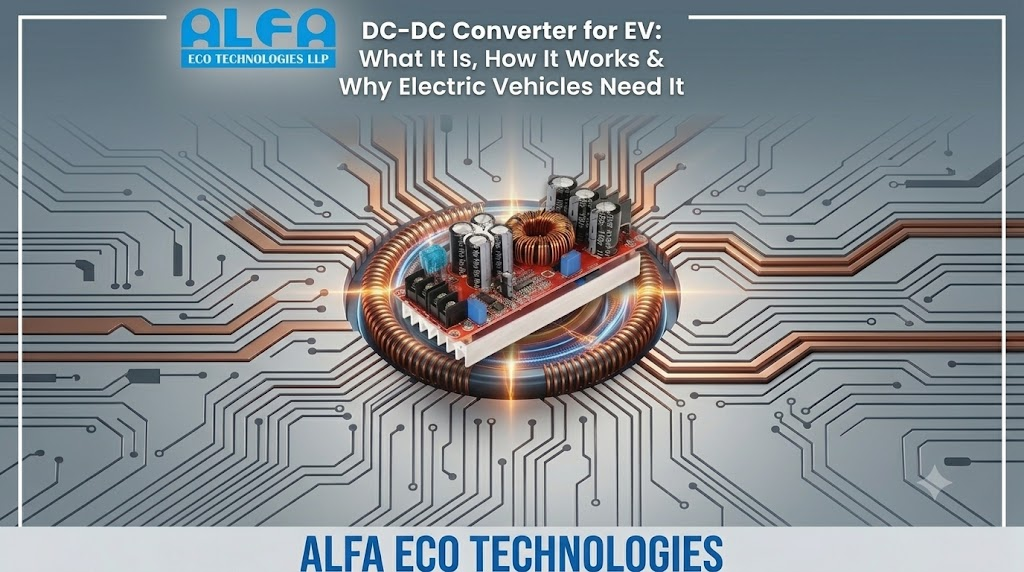
DC-DC Converter for EV: What It Is, How It Works & Why Electric Vehicles Need It
Electric vehicles (EVs) rely on multiple electronic systems that operate at different voltage levels. One key component that manages this power distribution is the DC-DC converter for EV. Without it, essential systems like lights, infotainment, sensors, and control units would not function properly.
What Is a DC-DC Converter in an Electric Vehicle ?
A DC-DC converter for EV is an electronic device that converts one DC voltage level into another DC voltage level. In electric vehicles, the high-voltage battery (usually 200V–800V) powers the traction motor, but many vehicle components operate on 12V or 48V systems.
The DC-DC converter steps down the high-voltage power from the main battery to a lower voltage required by auxiliary systems.
Example :
High-voltage battery → DC-DC converter → 12V battery → Vehicle electronics
This conversion allows the EV to safely power systems such as :
- Headlights and interior lighting
- Infotainment systems
- Power steering
- Sensors and control modules
- Air conditioning systems
Without a DC-DC converter, these components could not operate from the main high-voltage battery.
Why Electric Vehicles Need a DC-DC Converter ?
Electric vehicles rely heavily on electronics and digital control systems. A DC-DC converter for EV plays a critical role in maintaining stable voltage for these systems.
1. Voltage Regulation
EV batteries operate at very high voltages. The converter reduces this voltage to levels suitable for smaller electronic components.
2. Power Distribution
The converter distributes power from the traction battery to multiple systems within the vehicle.
3. Battery Charging Support
In many EV designs, the DC-DC converter also charges the 12-volt auxiliary battery, which powers low-voltage systems.
4. Improved Energy Efficiency
Modern converters are designed for high efficiency, reducing energy loss and improving overall vehicle range.
How a DC-DC Converter Works in EVs ?
A typical DC-DC converter for electric vehicles operates through high-frequency switching technology.
Step-by-Step Process
1. Input Power
- The converter receives high-voltage DC power from the main EV battery.
2. Switching Circuit
- Electronic switches rapidly turn on and off to regulate voltage.
3. Transformer or Inductor Stage
- Voltage is stepped down or up depending on system requirements.
4. Rectification and Filtering
- The output is stabilized to provide clean and consistent DC power.
5. Output Voltage
- Low-voltage power is supplied to vehicle electronics.
This process occurs continuously while the vehicle is operating.
Types of DC-DC Converters Used in Electric Vehicles
EV systems may use different converter configurations depending on vehicle architecture.
1. Step-Down Converter (Buck Converter)
The most common DC-DC converter for EV reduces high voltage to lower voltage levels such as 12V.
Used for:
- Lighting systems
- Infotainment
- Sensors
2. Step-Up Converter (Boost Converter)
This converter increases voltage when needed for specific vehicle components.
3. Bidirectional DC-DC Converter
Modern EVs often use bidirectional converters, which allow power to flow in both directions.
Benefits Include :
- Battery charging
- Vehicle-to-grid (V2G) applications
- Energy recovery systems
Key Features of High-Quality EV DC-DC Converters
A reliable DC-DC converter for EV applications should include the following features :
- High conversion efficiency (typically above 90%)
- Compact and lightweight design
- Thermal protection and safety circuits
- Wide input voltage range
- Stable output voltage
- Automotive-grade reliability
These features ensure safe operation and long-term durability in demanding automotive environments.
Benefits of DC-DC Converters in Electric Vehicles
Improved Vehicle Efficiency
High-efficiency converters reduce power loss, helping EVs achieve better range.
Stable Electronic Performance
Consistent voltage ensures that critical systems operate reliably.
Reduced Component Stress
Voltage regulation protects sensitive electronic components.
Compact Integration
Modern converters are designed to fit easily within EV powertrain architecture.
DC-DC Converter Applications Beyond EVs
Although widely used in electric vehicles, DC-DC converters also play an important role in many industries.
Common applications include :
- Renewable energy systems
- Solar power installations
- Industrial automation
- Telecommunications equipment
- Electric mobility systems
This makes DC-DC converters a critical component in modern power electronics.
Choosing the Right DC-DC Converter for EV Systems
When selecting a DC-DC converter for electric vehicles, manufacturers and engineers typically evaluate several factors.
Key Considerations Include :
- Input voltage range
- Output voltage requirements
- Power rating
- Thermal performance
- Efficiency rating
- Safety certifications
Choosing the right converter ensures reliable vehicle performance and long-term operational stability.
Future of DC-DC Converters in Electric Vehicles
As EV technology advances, DC-DC converter systems are also evolving.
Key Trends Include :
- Higher power density converters
- Silicon carbide (SiC) semiconductor technology
- Integrated power electronics modules
- Bidirectional charging systems
- Improved thermal management
Final Thoughts
The DC-DC converter for EV is one of the most important components in modern electric vehicle architecture. It ensures stable power distribution, protects electronic systems, and improves overall energy efficiency.
As electric mobility continues to grow worldwide, high-performance DC-DC converters will remain essential for reliable and efficient EV operation.
Frequently Asked Questions (FAQ)
Q1. What is a DC-DC converter in an EV ?
A DC-DC converter in an electric vehicle converts high-voltage DC power from the main battery into lower voltages used by auxiliary systems like lighting, infotainment, and sensors.
Q2. Why is a DC-DC converter important in electric vehicles ?
The converter ensures that all low-voltage vehicle electronics receive stable power while protecting them from high-voltage battery systems.
Q3. What voltage does a DC-DC converter output in EVs ?
Most EV converters reduce high battery voltage to 12V or 48V, which powers standard automotive electronics.
Q4. Are DC-DC converters efficient ?
Yes. Modern EV DC-DC converters typically achieve efficiency levels above 90%, minimizing energy loss and improving vehicle range.
Q5. Can a DC-DC converter charge the 12V battery in an EV ?
Yes. In many electric vehicles, the DC-DC converter charges the 12-volt auxiliary battery while the vehicle is running.